Shipping chilled fruit and vegetables

Deliver fruit and vegetables safely and quickly by shipping chilled via air freight.<\/h3>

Despite being a small country, the Netherlands is a major exporter of fruit and vegetables worldwide. Fruit and vegetable exports have continued to grow in recent years.<\/h4>

The Netherlands thus contributes to providing healthy food to the global population. Fruit and vegetables are healthiest when consumed as fresh as possible. The fresher fruit and vegetables are, the more vitamins and important nutrients they still contain.<\/p>

For fruit and vegetable exports, it is therefore important to be able to deliver products to customers as quickly as possible. The fastest way to deliver products over a long distance is via air freight shipping.<\/p>

Airfreight shipping<\/h2>

Through air cargo shipping, products are transported from one airport to another. If one chooses to ship products by air freight, products can arrive at the respective customer within as little as one to two days. This fast delivery helps maintain the quality of products. However, fast delivery alone is insufficient to preserve the quality of perishable products such as fruit and vegetables. Fruits and vegetables are very sensitive to temperature changes. It is therefore important that the transport of these products takes place under the right conditions so that the products retain their quality. This way, you prevent product wastage. Moreover, this way you avoid damage claims. Thus, maintaining the quality of products is not only good for the health of people and nature, but also good for the (financial) health of your company.<\/p>

Products like fruit and vegetables maintain their quality by keeping them chilled during shipping. Using the right packaging materials and cooling elements, chilled and frozen products remain at the right temperature during airfreight shipment. However, it is not only important to protect products from failure and other damage. Since air cargo shipping involves unaccompanied transport, it is also necessary to prevent criminals from gaining access to air cargo. There are several solutions for sending fruit and vegetables safely and refrigerated via air freight.<\/p>

Solutions to ship chilled and frozen products by air freight<\/h2>

Gel packs<\/h3>

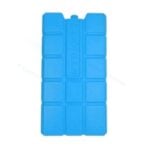
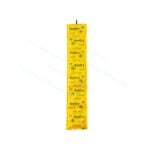
When you want to send a parcel chilled or frozen via air freight, it is important to use cooling elements. Using cooling elements keeps products at the right temperature for a longer period of time. Most fruits and vegetables are best cooled between zero and eight degrees while shipping them. Gel packs have a lot of cooling power and can keep products at the right temperature for up to 48 hours.<\/p>

Gel packs are therefore very suitable for air cargo shipping. Moreover, gel packs are easy to dispose of. As fruit and vegetables are often shipped by air without a return procedure, this also makes the use of gel packs very suitable. Gel packs are available in various sizes and weights. As they do not give off melt water (as ice, for instance, does), products do not get wet. This prevents mould formation.<\/p>

Insulating film<\/h3>

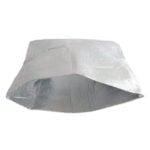
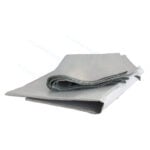
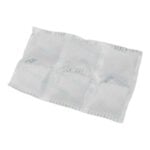
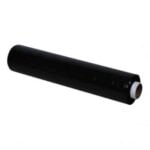
Using insulating film also prevents fruit and vegetables from spoiling. Insulating film is a packaging material that allows fruit and vegetables to ‘breathe’ inside the packaging. The film adapts to the ambient temperature. At colder temperatures, the film remains more closed, while it opens more at higher temperatures. In this way, the products still get enough oxygen and the CO2 emitted can leave the packaging. This keeps fruit and vegetables good for longer.<\/p>

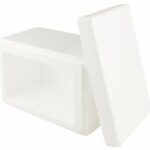
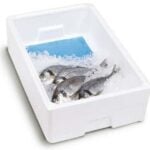
Insulated thermo box for transporting meat and other temperature-sensitive products.

Thermal covers<\/h3>

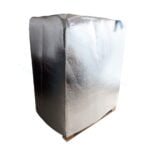
One can choose thermocovers when it comes to the fragile products that are extremely sensitive to high temperatures such as soft fruits and lettuce varieties or when the products are going to a destination with extreme high temperatures such as destinations in the Middle East. These covers can wrap packages in their entirety. <\/p>

The outside of thermocovers protects against UV radiation and the inside of the thermocovers can reflect cold air. So when you add cooling elements to the package with a thermocover, you actually create a kind of cooler around your package. Because thermocovers can cover parcels completely, the protection against outside temperature influences is optimal. Thermocovers also protect products against possible damage during transport. As a result, the products still look their best when they reach the customer, which is good for customer satisfaction. So you kill two birds with one stone (and your products are well protected against this).<\/p>

Another nice thing about thermocovers is that they reduce the risk of involvement in criminal activities. I am not speaking from experience, but you can imagine that it is quite difficult to put drugs or explosives undetected in a fully sealed package.<\/p>